How to Make Water Glow in the Dark (the Safe, Drinkable Way)
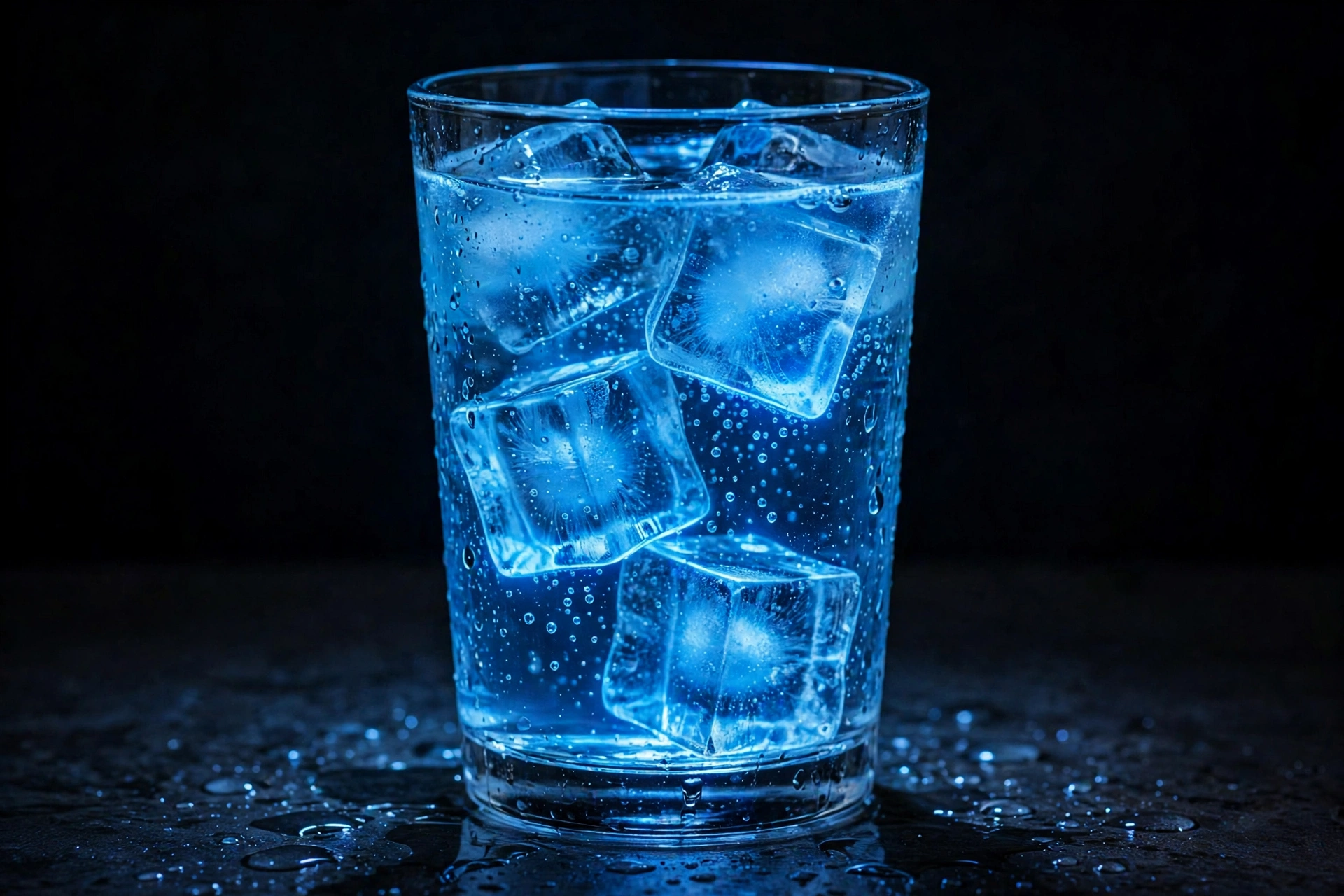
There are two kinds of glow, and only one of them belongs in a glass. Fluorescence glows while a blacklight shines on it; phosphorescence (glow sticks, glow paint) keeps glowing after - and nothing phosphorescent is food. The good news: the fluorescent version is sitting in the mixer aisle.
The trick that works: tonic water
Tonic water's bitterness comes from quinine, a compound from cinchona bark that happens to be intensely fluorescent: under ultraviolet light it absorbs invisible UV and re-emits it as an electric blue glow you can see across a dark room. It works diluted, it works in ice cubes, and it is genuinely drinkable - quinine in tonic is an FDA-regulated food ingredient, capped at 83 parts per million, and each glass carries a tiny fraction of the doses once used as malaria medicine. Serve a gin and tonic (or a tonic-and-lime for the kids' table) under a blacklight and the glass looks lit from inside.
The second color: vitamin B2
Riboflavin - vitamin B2, the thing that turns vitamin-water and energy drinks neon - fluoresces yellow-green under UV. A drink containing B2 (many sports and vitamin drinks list it on the label) glows a completely different color from tonic, which gives you a two-color party palette with zero weird chemicals. Excess B2 is simply excreted; it may tint urine bright yellow, which is normal and harmless.
How to run it
- The light: a 365 nm UV-A LED blacklight (bulb, strip or torch). UV-A at party levels is the same light as a bug-zapper glow - use it like any bright light: don't stare into it, and keep exposure casual.
- The room: darker is dramatically better. Even a hallway light washes out the effect.
- The serve: clear glasses, lots of tonic, minimal diluting mixers for maximum glow. Glowing tonic ice cubes in lemonade is the single best-looking version we've seen.
- The taste note: quinine is bitter. Lemonade, lime and sweet sparkling water balance it; the kids' recipe is tonic + lemonade + glowing cubes.
Never, ever these
- Glow sticks cracked into drinks. The internet's favorite video, and a real hazard: glow-stick fluid contains solvents and dibutyl phthalate around a hydrogen-peroxide core. Poison centers take these calls every Halloween. The glow stick goes next to the cup, never in it.
- Highlighter ink. Fluorescent, yes; food, no. It is a chemical dye in solvent, and "non-toxic" school supplies are rated for skin contact, not ingestion.
- "UV party powders" and blacklight paints. Cosmetic/craft chemicals with no food approval at all.
- Fluorescein tablets. A medical dye, occasionally misused for party tricks - not a beverage ingredient.
The honest fine print
Nothing drinkable glows on its own in true darkness - if a video shows a beverage shining with no blacklight in frame, the light is hidden or the liquid isn't a beverage. But with a $15 blacklight, tonic water gives you the real effect, safely, from the grocery store. That is a better trick than the glow stick ever was.
More curious water questions
- Should You Add Psilocybin Mushrooms to Your Water?
- Can Any Water Cure (or Kill) Cancer? Every Claim, Graded
- The Safest Ways to Color Water for Kids: Silly, Fun and Actually Drinkable
- Moon Water: What's Real, What's Ritual - and How to Make It Safely
- Crystal Water Bottles: The Stones That Should Never Touch Your Drink
Start with water you can verify
Curiosity handled, the everyday question remains what's in your tap. Two minutes with the Filter Finder turns it into a graded shortlist.