Moon Water: What's Real, What's Ritual - and How to Make It Safely
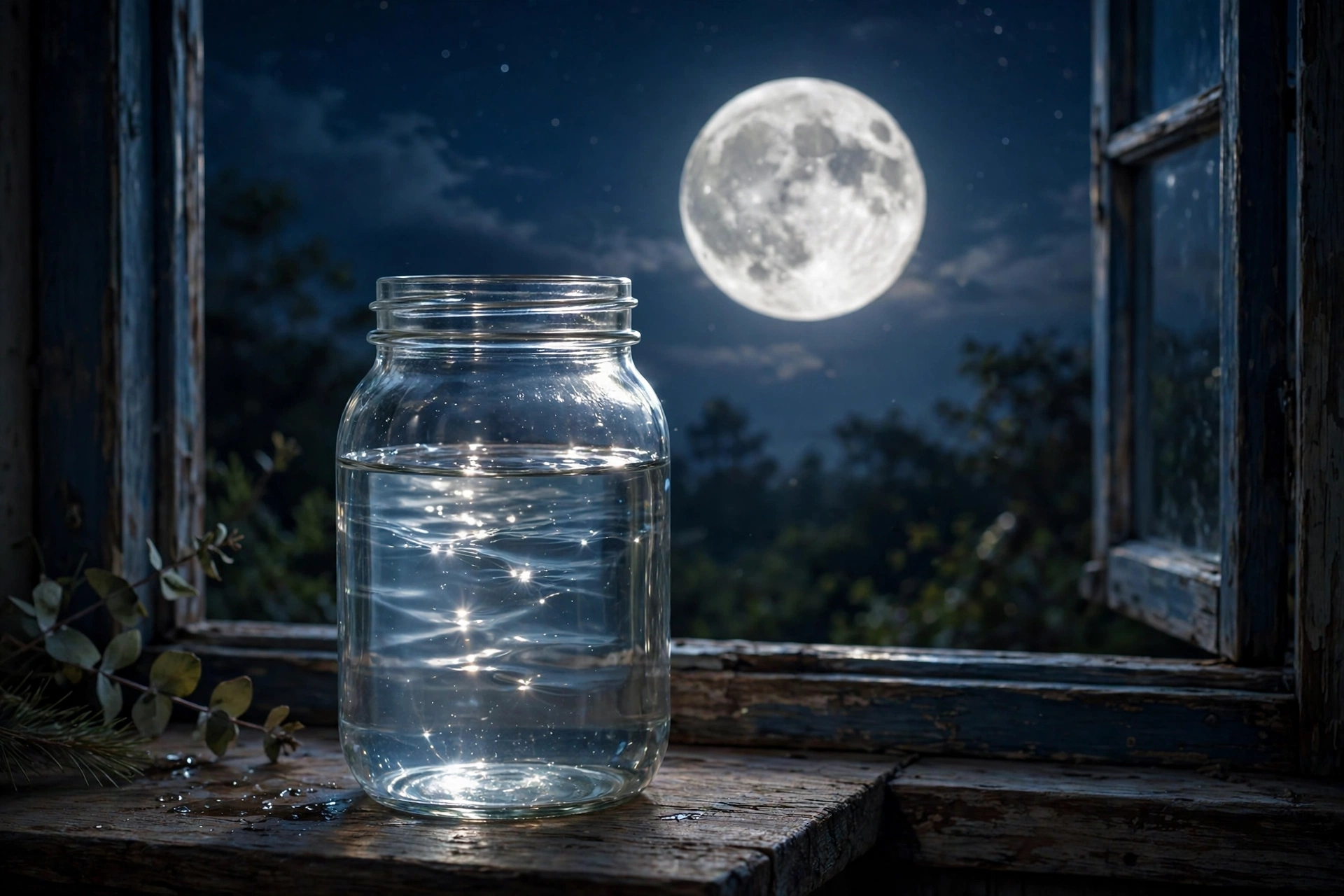
Moon water - a jar of water left out under a full moon to "charge" - is one of the biggest water trends on social media, with creators keeping special batches for years. Every guide to it lives on a spirituality blog. None of them is written by someone who thinks about water safety for a living. Until now.
What practitioners do
The standard method, consistent across hundreds of guides: fill a clear glass jar with water - spring or filtered is the community's stated preference - cover it, set it where moonlight falls overnight, state an intention, and bring it in before morning sun. The water is then used for drinking, baths, watering plants, or ritual work, and special batches (eclipse water, particular full moons) are labelled, dated and stored.
What moonlight does to water: the physics
Almost nothing, and it's worth knowing why. A full moon shines at roughly 0.1 lux of light; direct sunlight is around 100,000 lux - moonlight is quite literally reflected sunlight at about a millionth of the intensity. At that energy, no measurable chemical change occurs in water: no disinfection, no restructuring, nothing an instrument could find. The ritual meaning people take from moon water is real to them, and this site has no quarrel with ritual. But if a seller ever charges you a premium for "moon-charged" water as a physical product, know that the moon did not measurably change what's in the jar.
The sunlight version is real science
Here is the delightful contrast: leaving water in the sun genuinely does something. Solar disinfection (SODIS) - clear PET bottles of water exposed to strong sun for about 6 hours - is a recognized emergency water-treatment method, because sunlight's UV-A and heat actually inactivate bacteria and viruses. Same folk instinct (sky light charges water), opposite evidence. Moon water is poetry; SODIS is public health.
The safety part the videos skip
- The overnight jar. Water sitting outdoors uncovered collects dust, pollen, insects and whatever the neighborhood wildlife contributes. Practitioners who cover their jars are doing food safety whether they call it that or not - keep a lid on.
- The years-long shelf. Some creators proudly keep moon water for three years at room temperature. From a water-quality standpoint, stored drinking water is a perishable: microbes introduced at filling slowly multiply in a stagnant, room-temperature jar. Water kept for drinking belongs in a sanitized, sealed container, in the fridge, used within days - the same rule as any stored water. Long-kept ritual jars are best treated as non-drinking water, full stop.
- The freezing jar. Glass plus freezing temperatures plus expansion equals cracked jars - wintersill practitioners learn this once.
If you're making it, make it like this
Start with filtered water in a washed, covered glass jar. Enjoy the night. In the morning, refrigerate it, and drink it within a few days like any fresh water - or designate the jar as ritual-only and never drink from it again. Label and date it, as the experienced practitioners insist, just for a more practical reason than they give: so future-you knows which category it's in.
The moon, as far as any instrument can tell, leaves your water exactly as it found it. What you bring to the jar - clean water, a clean vessel, an intention to pay attention to it - is the part that was ever really in your control. Which, we suspect, is rather the point of the ritual.
More curious water questions
- Should You Add Psilocybin Mushrooms to Your Water?
- Can Any Water Cure (or Kill) Cancer? Every Claim, Graded
- The Safest Ways to Color Water for Kids: Silly, Fun and Actually Drinkable
- How to Make Water Glow in the Dark (the Safe, Drinkable Way)
- Crystal Water Bottles: The Stones That Should Never Touch Your Drink
Start with water you can verify
Curiosity handled, the everyday question remains what's in your tap. Two minutes with the Filter Finder turns it into a graded shortlist.